


A New Perspective on Sensors: Discovering the Subtle Beauty of Technology
Chu Junhao, an academician of the Chinese Academy of Sciences, said in "Intelligent Sensing, Perceiving the World": if an intelligent system is compared to a "person", then sensors are the "sense organs" of that person. Different types of sensors perceive the surrounding environment and transmit data to the system for computation, enabling real-time analysis, judgment and response to situations. This article explores this through everyday life examples and how these functions play an irreplaceable role around us.

The Agile "Antennae" of the Internet of Everything
Sensors are like the "antennae" of the technology world, precisely perceiving every subtle change and complex piece of information. A smartphone contains more than a hundred sensors: light sensors that detect ambient light and automatically adjust screen brightness, image sensors for taking photos and videos, as well as fingerprint, GPS... These sensors work together to perceive the surrounding environment and provide users with a variety of functions and interactive experiences based on this information. Sensors also play a vital role in the medical field — they monitor patients' physiological parameters in real time and accurately, providing doctors with key diagnostic evidence. For example, a blood glucose meter detects the glucose content in the blood through a sensor, making it convenient for diabetic patients to self-monitor and adjust treatment plans. In addition, in intensive care units, multiple sensors can simultaneously monitor indicators such as respiration and blood oxygen saturation, providing medical staff with comprehensive information about the patient's condition and ensuring timely and effective treatment.

Exploring New Scenarios and Unknown Fields
With intelligent sensing technology, a variety of sensing units and microsystems capable of acquiring, storing and analyzing information can be manufactured, achieving low-cost, high-accuracy information collection. Intelligent sensors are also widely used to develop non-invasive or minimally invasive health monitoring devices. The dynamic glucose monitor, popular in recent years, is a great example. Diabetic patients painlessly place a flexible sensor into the body; the sensor measures blood glucose every 5 minutes and transmits the readings to a mobile app. Patients can observe the changes in the glucose curve and regulate blood glucose in time through diet, exercise and other methods.

New Models, New Momentum, Developing New Quality Productive Forces
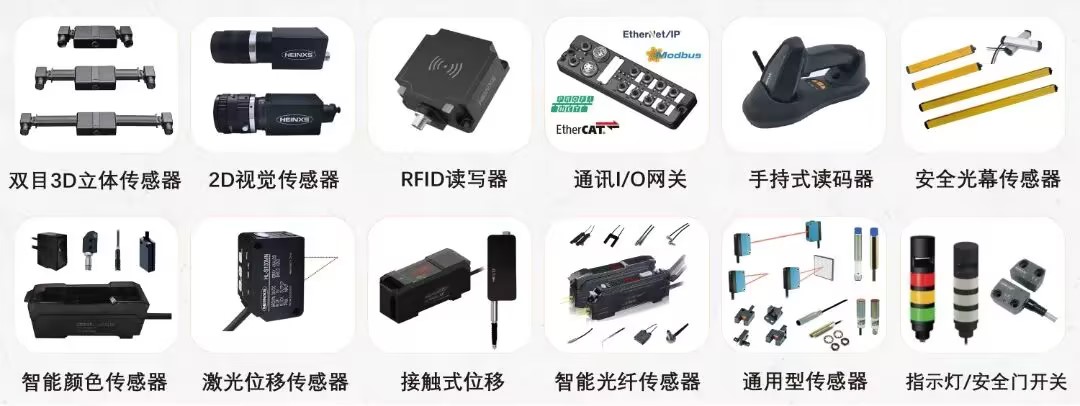
With the full rollout of 5G networks and the rapid development of artificial intelligence, under the wave of Industry 4.0, intelligent manufacturing has become an important trend in global manufacturing development. Against this backdrop, Heinxs sensors empower efficient production, with extensive deployments in smart cities to improve management efficiency. In the fields of healthcare and smart home, it is opening new models and activating new momentum, adding strong driving force to the development of new quality productive forces.